Description
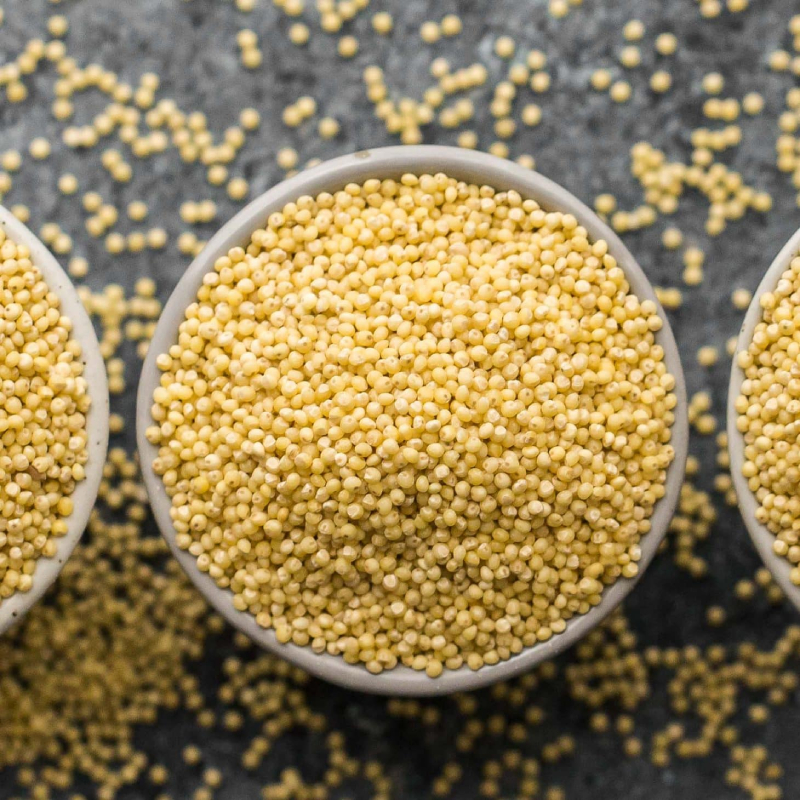
Millet can be prepared like rice, substituted for potatoes when cooked with more liquid, and make a great addition to grain bread. Whole grain millet is a relatively quick cooking grain, ready in less than 30 minutes. Because of this, it's often a go-to for those fast dinners.
This pseudograin also makes a great bed for roasted vegetables, curries, and stews. Lightly toast millet before cooking to enhance the earthy, nutty flavor. Leftover millet can be tossed in salads or added to your morning eggs ( I love adding about ½ cup of cooked millet to frittatas - it’s a great way to add bulk). If you are in need of some wonderful millet recipes, scroll to the bottom of the page to see the current recipe list.
Types Of Millet
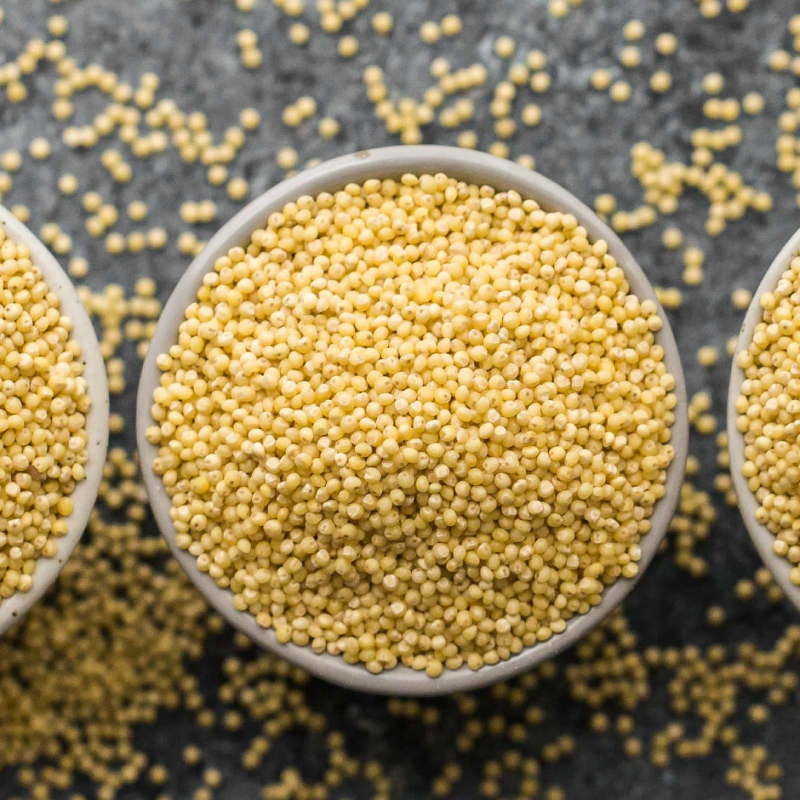
1. Whole grain: Typically in grocery stores you will find millet in it's whole form. These tiny yellow seeds are fairly easy to spot- there's nothing that quite looks like them. Buy this type of millet for any kind of millet recipes calling for 'millet' without any clarification.
2. Grits: In some stores and online, you can find millet grits. This is whole grain millet that has been cracked into smaller pieces. Millet grits are great if you're looking to make porridge or polenta. However, millet is easy enough to crack if you have a blender or food processor.
3. Puffed: Not to be confused with the idea of popping millet, puffed millet is found in the cereal aisle next to puffed rice. It's great as a cereal base or used in treats.
4. Flour: Beyond the grain, millet makes a wonderful, mild gluten-free flour. It’s great when paired with other gluten-free flours and is part of my favorite blend with oat and sorghum flour.
 Arabic
  English
  Dutch
Dutch  French
  German
  Hungarian
  Italian
  Japanese
  Korean
  Turkish